
Four Tips for Nymphing in higher flows
This article is designed to assist those who are new to fly fishing or unfamiliar with the Truckee Tahoe area, where we frequently engage in nymph fishing for trout. High water flows can occur at any time, but they are generally observed during the winter and spring. For instance, the flow rates on the Truckee River are 350 cubic feet per second or more upstream of the town, increasing as they approach the state line. The Little Truckee River flows at approximately the same rate, at 350 cubic feet per minute, which is considered high. During this time of year, water temperatures are also lower than in the summer months, resulting in less active fish, making it crucial to effectively present your flies. This article will cover the use of split shot, tungsten bead flies, leader setup, and jig hooks.
In this discussion, I will focus on the mechanical aspects that influence the depth of your flies, rather than the style or technique. Whether you choose to use indicator nymphing, Euro nymphing, or a combination of both, the objective of nymphing is to reach the fish. To achieve this, adding weight is essential. Weight can be added through split shot, beadheaded flies, or weighted flies. It is crucial to carefully monitor and adjust the amount of weight used. This process should not be random. Excessive weight can cause snagging, while insufficient weight may prevent you from reaching the optimal zone.

Splitshot
Splitshot is arguably the most straightforward method for adjusting weight. This process should be deliberate; it is advisable to use a consistent size and be aware of the weight. I prefer the BB size as it offers greater versatility in slower water. While BB size might not suffice in the strongest currents, it's worth considering whether fish are present in such conditions. Depending on the depth and speed of the current, I might use between one and five. With experience, you can accurately determine how many are necessary to effectively sink your flies in any given situation.

Weighted Flies
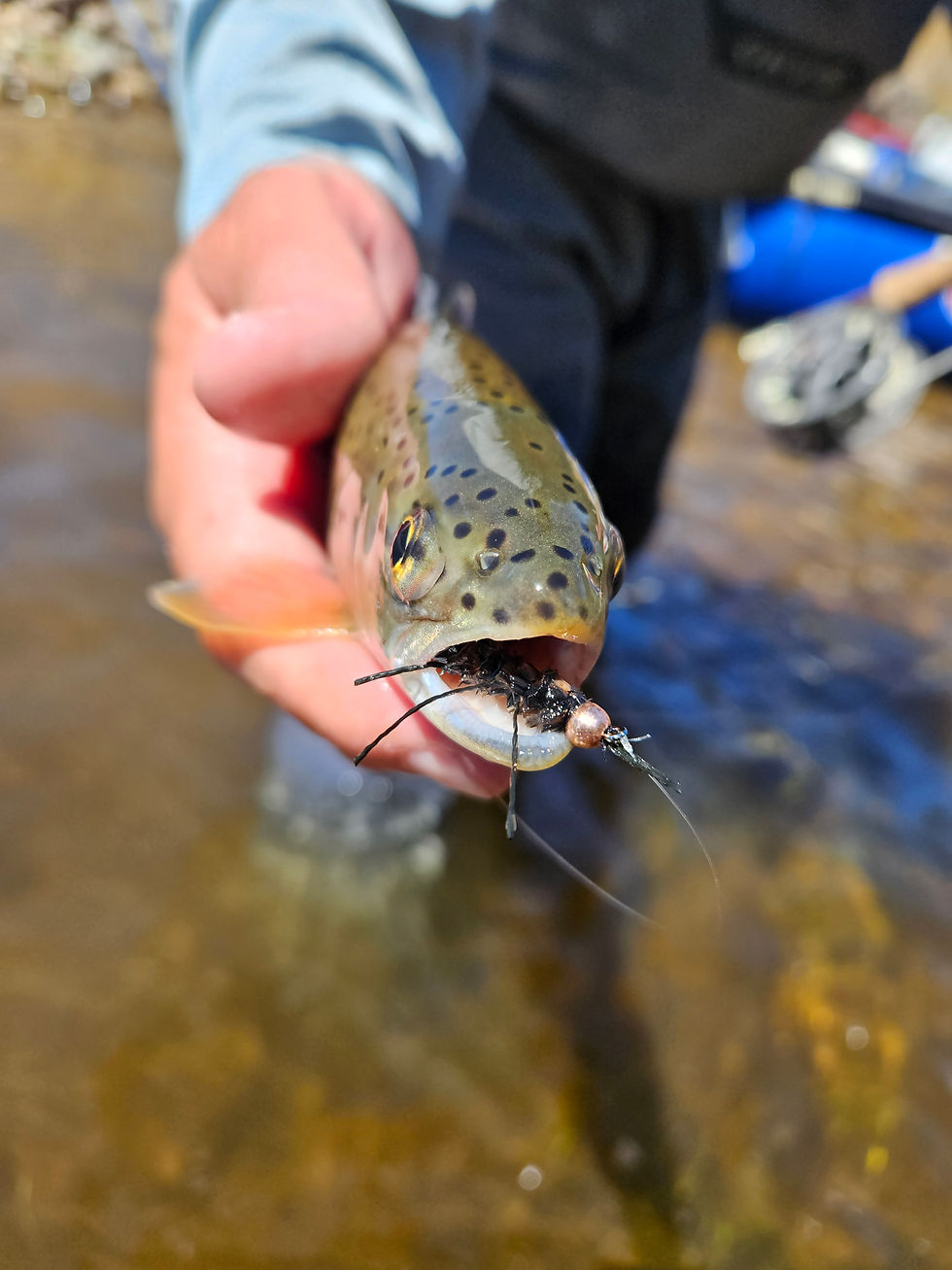
When a single BB shot proves excessive, tungsten beaded flies offer an alternative to achieve the desired depth, allowing for precise adjustments. Tungsten beads are highly effective, being approximately twice as heavy as brass beads of similar size. In some instances, tungsten beads can replace splitshot, thereby reducing clutter on the leader and minimizing the risk of spooking fish and tangling during casting. While tungsten beads are a significant component of my fly box, I also carry unweighted flies for specific situations or shallow waters.
Understanding the weight of the items you are using is crucial. Familiarity with the weight of various bead sizes aids in making precise adjustments. Begin with one large fly and then add another, possibly smaller one. If this is insufficient, opt for a larger fly. Subsequently, add splitshot, incrementally, to position your flies effectively.
Leader
Let's discuss the leader setup. There are numerous ways to configure a nymphing setup, and here are a couple of examples. Initially, a standard tapered leader is adequate for beginners; however, there are ways to enhance your setup. Incorporating a straight tippet into your leader can improve performance. One method is to cut off half of the tapered leader and attach a micro swivel, then add your preferred tippet. You might also consider adding a section of colored tippet, known as a sighter, followed by the swivel and tippet. This approach is particularly effective when not using an indicator and employing a tightline nymphing style at close range. The advantage of using a straight tippet is its ability to penetrate the water more efficiently than the thicker mid to butt sections of a tapered leader, allowing your flies to reach the target zone more quickly and discreetly. To enhance stealth, I recommend using fluorocarbon tippet material, which offers greater abrasion resistance and superior sinking properties compared to monofilament. While monofilament is also an option, it may require the addition of more weight.

Hooks
Similar to rigging, there are various hook styles available. Typically, I prefer using a nymph pattern tied on a jig hook for two primary reasons. Firstly, a beadhead jig hook is less prone to snagging compared to a fly tied on a standard downeye hook, especially when additional weight is applied. Secondly, barbless jig hooks are highly effective at securing the catch; their design and shape make it more challenging for the fish to escape.
Whether you opt to use split shot to achieve deeper fly placement or meticulously select various sizes of tungsten-beaded flies for precise weight adjustments, employing a thinner tippet-only leader and jigged flies will enhance your success on the Truckee and Little Truckee Rivers during periods of high water flow.
You can also check out my Nymphing Clinic that I have coming up where I will go into more details about nymphing.
Experience an Unforgettable Fly Fishing Adventure!
Four Seasons Fly Fishing is the premier Orvis-endorsed guide service in the Truckee and Tahoe area. We offer specialized fly fishing walk/wade trips on local rivers and reservoirs, along with comprehensive clinics tailored to all skill levels.
Contact us today to book your fly fishing experience:
Call or Text: 530-386-0525


Comments